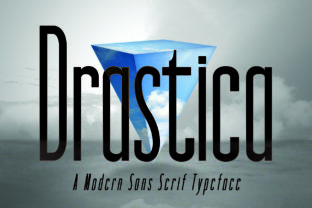
Drastica: A Clean, Confident Sans Serif for Real-World Design
Drastica is a simple yet elegant sans serif font—designed to feel modern without trying too hard. It’s not flashy or experimental; instead, it offers quiet confidence through balanced letterforms, consistent stroke contrast, and generous spacing. Whether you’re building a startup landing page, designing a restaurant menu, or preparing a client presentation, Drastica works because it stays out of the way—while still making a subtle, memorable impression.
Where Drastica Fits Naturally (and Why It Stands Out)
Think about the last time you scrolled past a website or picked up a brochure that just felt trustworthy—clean, intentional, easy to read. That feeling often starts with type. Drastica excels in contexts where clarity and calm professionalism matter more than visual noise. Here’s where it shows up most effectively:
- Small business branding: A local coffee roaster, boutique fitness studio, or independent therapist doesn’t need a font shouting from the rooftops. Drastica delivers approachability and polish at the same time—ideal for logos, signage, and social media graphics that reflect authenticity and care.
- Digital product interfaces: In dashboard UIs, SaaS onboarding flows, or internal tools, legibility under different screen sizes and light conditions is non-negotiable. Drastica’s open counters and clear lowercase ‘a’, ‘e’, and ‘g’ reduce eye strain during extended use—especially helpful for admin panels or data-heavy applications.
- Editorial layouts for digital and print: Newsletters, annual reports, and long-form blog posts benefit from fonts that support reading—not interrupt it. Drastica’s even rhythm and modest x-height make it comfortable for both screen and printed text, especially at 14–18px body sizes.
- Presentation decks and pitch materials: When your audience has 20 minutes to grasp your idea, every element must earn its place. Drastica keeps slides focused and uncluttered—whether you're a founder pitching to investors or an educator sharing curriculum updates.
Who Benefits—and How They Use It Differently
Drastica isn’t one-size-fits-all—but it is highly adaptable across roles and goals:
A freelance designer might choose Drastica for a nonprofit rebrand because it conveys sincerity without leaning into corporate sterility. They’ll pair it with a warm serif for headings or let it shine solo in minimalist stationery—knowing donors respond to typography that feels human and grounded.
A marketing manager at a midsize tech company may use Drastica across their email campaigns and help center. Its neutral tone avoids alienating any segment of their user base, while its consistency builds recognition over time—even if readers don’t consciously notice the font, they’ll register the brand as dependable and clear.
An indie publisher selecting a typeface for a new essay collection might test Drastica against other contemporary sans serifs and land on it for its subtle warmth. Unlike ultra-geometric fonts that can feel cold in long passages, Drastica’s slight modulation in stroke weight adds quiet personality—enough to reflect voice, not distract from content.
Practical Considerations Before You Commit
Like any tool, Drastica shines brightest when matched to the right job. Here’s what to keep in mind before integrating it into your next project:
- It’s not built for extreme hierarchy: If your design relies heavily on dramatic contrast—like pairing ultra-thin with ultra-bold for impact—Drastica’s family may feel restrained. It offers clean weights (Light, Regular, Medium, Bold), but lacks extremes like Black or Hairline. That’s intentional—and often ideal—but worth noting if your layout depends on typographic theatrics.
- Legibility at small sizes is strong—but test in context: While Drastica renders well down to 10pt in print and 12px on screen, always preview how it behaves with your specific background colors, line heights, and device mix. A crisp white-on-gray web button may look perfect in Figma but soften slightly on older Android devices.
- Language support is solid, not exhaustive: Drastica covers Latin-based languages thoroughly—including extended diacritics for French, Spanish, German, and Scandinavian use. It also includes basic Greek and Cyrillic characters, making it viable for bilingual EU-facing sites or multilingual product packaging. But if your project requires full Vietnamese, Arabic, or Devanagari support, you’ll need to supplement or explore alternatives.
- Licensing is straightforward—but verify your use case: Drastica is available under standard desktop, web, and app licenses. If you’re embedding it in a mobile app distributed via Apple App Store or Google Play, confirm the license tier includes app usage. Most designers find the single-site web license sufficient for CMS-driven blogs or small business sites—but enterprise platforms with dynamic subdomains may require extended coverage.
Strengths That Make It Worth Your Time
What sets Drastica apart isn’t novelty—it’s reliability backed by thoughtful detail:
- Low visual fatigue: Its generous letter spacing and moderate contrast mean readers stay engaged longer, especially in dense content like terms of service, policy documents, or instructional guides.
- Cross-platform consistency: Whether viewed on Safari, Chrome, Firefox, or Edge—and whether rendered via system fonts or web font loading—Drastica maintains its shape and spacing better than many newer sans serifs that rely heavily on variable font tech or OS-specific hinting.
- Design-team friendly: Developers appreciate its predictable metrics and lack of unusual OpenType features that complicate CSS font stacks. Designers love how it pairs effortlessly with common serif companions (think Lora, Merriweather, or Source Serif) without competing for attention.
- Print-ready out of the box: No need to adjust tracking or kerning for brochures or business cards—Drastica’s spacing holds up beautifully in high-res PDFs and CMYK workflows.
When Another Font Might Be a Better Fit
Drastica isn’t the answer to every typographic question—and that’s okay. Consider alternatives if:
- You’re designing for children or users with dyslexia and need a font with stronger character differentiation (like OpenDyslexic or Inter’s dyslexia-optimized variants).
- Your brand identity leans into bold playfulness—say, a toy company or creative workshop—where a more expressive, rounded sans (like Quicksand or Nunito) would resonate more authentically.
- You’re building a global fintech platform requiring extensive multilingual support beyond Latin, Greek, and Cyrillic scripts.
- You need tight vertical rhythm in narrow columns (e.g., financial tables or code documentation), where a more condensed sans like IBM Plex Sans Condensed or FF Mark may offer greater density without sacrificing readability.
Ultimately, Drastica earns its place not by being everything to everyone—but by doing a few things exceptionally well: supporting clarity, reinforcing trust, and adapting quietly across mediums. It’s the kind of font you notice only when it’s missing—because everything else just feels slightly less settled, less sure of itself.