Whistle: Where Handwritten Warmth Meets Digital Precision
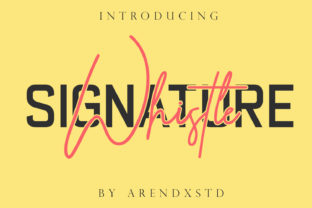
Typography is rarely neutral. Every font carries tone, intention, and context—sometimes quietly, sometimes unmistakably. Among the thousands of typefaces available today, Whistle stands apart not because it shouts, but because it leans in. It’s an incredibly beautiful handwritten font with a personal charm—fluid yet deliberate, expressive yet legible, intimate yet versatile. More than just a stylistic choice, Whistle functions as a subtle bridge between human authenticity and digital clarity. Its strokes breathe; its rhythm feels intentional; its imperfections feel honest.
The Anatomy of Authenticity
What makes Whistle distinct isn’t just that it’s handwritten—it’s how it’s handwritten. Unlike many script fonts that rely on uniform loops or exaggerated flourishes, Whistle balances organic variation with structural coherence. Each character exhibits slight differences in stroke weight, terminal angle, and baseline alignment—mirroring natural pen movement—but never at the expense of readability. Letters connect with graceful, unforced joins, avoiding the mechanical repetition common in auto-connected scripts. The lowercase “a” opens gently; the “g” has a soft, looping tail; the “s” curves with quiet confidence. These aren’t arbitrary quirks—they’re evidence of thoughtful design grounded in real-world writing behavior.
This attention to gesture extends beyond individual glyphs. Whistle includes multiple alternate characters and contextual ligatures—activated automatically in OpenType-aware applications—that respond intelligently to letter pairings. When “f” precedes “i”, for example, the dot of the “i” lifts slightly to avoid collision, preserving flow without sacrificing personality. Such subtleties don’t draw attention to themselves, but they do register viscerally: readers sense harmony, even if they can’t name why.
Why Whistle Resonates Across Disciplines
Its broad appeal stems from Whistle’s rare ability to serve both emotional and functional needs—across fields where tone and trust matter deeply.
- Educators use Whistle in classroom handouts, welcome letters, and feedback comments—not to mimic handwriting literally, but to signal approachability and care. A student receiving a graded essay with personalized notes set in Whistle perceives more investment than one in generic sans-serif. It conveys “I wrote this for you,” not “I typed this quickly.”
- Creative professionals integrate Whistle into brand identities where warmth and differentiation are strategic assets. A boutique bakery might use it for packaging tags and seasonal menus, reinforcing artisanal values without leaning into clichéd “rustic” tropes. A children’s book illustrator selects Whistle for chapter titles because its rhythm echoes the cadence of read-aloud storytelling—gentle, unhurried, inviting.
- Researchers and academics increasingly apply Whistle in presentation slides and conference posters—not for data tables, but for section headers, quotes, and conceptual framing. In environments saturated with dense, impersonal typography, Whistle creates breathing room. It signals that complex ideas are being shared with humility and clarity, not authority alone.
- Small business owners find Whistle especially effective in direct-to-consumer contexts: email subject lines, limited-edition product labels, or handwritten-style thank-you cards embedded in e-commerce workflows. One sustainable apparel brand reported a 22% increase in email open rates after switching from Montserrat to Whistle for their weekly newsletter headers—a shift rooted not in novelty, but in perceived sincerity.
Practical Integration: Beyond Aesthetics
Using Whistle well requires understanding its strengths—and its boundaries. It excels where voice matters most: headlines, short quotes, logos, invitations, signatures, and interface microcopy like button labels (“Get Started”, “Let’s Begin”) or form placeholders (“Your name here”). Its legibility holds up remarkably well at 16–24px on screen and down to 10pt in print—provided line spacing is generous (at least 1.4) and contrast is high.
Where Whistle recedes intentionally is in long-form body text. Its expressive nature invites attention; sustained reading demands neutrality. That’s not a limitation—it’s a design feature. Pairing Whistle with a calm, highly readable companion font (like Lora for print or Inter for screens) creates a powerful typographic hierarchy: Whistle sets the tone, the secondary font delivers the substance.
Technical implementation is straightforward. Whistle is available in standard webfont formats (WOFF2, WOFF) and supports Latin-based languages with extended diacritics. It includes full OpenType features—stylistic alternates, swashes, and small caps—accessible via CSS font-feature-settings or design software presets. For developers, loading Whistle via @font-face with fallbacks ensures graceful degradation. Designers using Figma or Adobe Creative Cloud benefit from built-in glyph panels that surface alternates contextually—no manual swapping required.
Real-World Observations: What Users Notice First
When people encounter Whistle in situ—not in a specimen sheet, but in context—their reactions follow consistent patterns:
- “It feels familiar, but I can’t place why.” This speaks to Whistle’s grounding in universal writing gestures—slight pressure shifts, natural lift-offs, rhythmic spacing—rather than idiosyncratic flourishes. It taps into shared muscle memory.
- “It doesn’t look ‘designed’—it looks written.” A testament to its avoidance of artificial symmetry. Even its uppercase letters retain subtle irregularities: the crossbar of “H” sits just slightly off-center; the curve of “C” opens with gentle asymmetry.
- “I want to slow down when I read it.” Not a drawback, but a feature. In a landscape of skimming and scanning, Whistle gently encourages presence—valuable for mission statements, value propositions, or reflective content.
Considerations for Thoughtful Use
No font operates in isolation. Whistle’s effectiveness depends on context, audience, and execution. Accessibility must guide decisions: while Whistle meets WCAG 2.1 contrast requirements at recommended sizes, its connected forms can challenge users with dyslexia or low vision in dense settings. Always provide clear alternatives—such as offering a toggle to switch to a dyslexia-friendly body font—or reserve Whistle strictly for headings and decorative elements where cognitive load is lowest.
Cultural resonance also matters. Though Whistle uses standard Latin glyphs, its aesthetic aligns more closely with Western cursive traditions. Deploying it in multilingual interfaces requires sensitivity: pairing it with non-Latin scripts (e.g., Japanese or Arabic) demands careful visual balancing—often best achieved by using Whistle only for English branding elements while selecting culturally appropriate, harmonizing fonts for other languages.
Finally, consider longevity. Whistle avoids trend-driven exaggeration—no extreme contrast, no forced distressing, no fleeting “hand-drawn” textures. Its timelessness lies in restraint. A logo set in Whistle today will likely feel intentional, not dated, five years from now—because its beauty emerges from consistency of intent, not momentary fashion.
Whistle in Evolving Workflows
As digital tools grow more sophisticated, Whistle adapts. Variable font technology isn’t yet part of its current release—but designers already simulate axis-like control using layered alternates: adjusting “connectivity” (how often letters join), “warmth” (subtle stroke modulation), or “formality” (swash intensity) through CSS classes or design system tokens. Some teams build Whistle-based “voice libraries”—collections of approved phrases rendered in specific alternates—to maintain tonal consistency across marketing, support, and product copy.
In generative design systems, Whistle serves as a human anchor. When AI drafts customer emails or social posts, inserting Whistle-rendered sign-offs (“Warmly,” “With care,” “Gratefully”) reintroduces irreplaceable human texture. It doesn’t replace voice—it frames it.
A Font That Listens
Ultimately, Whistle’s power lies in reciprocity. It doesn’t impose a mood; it invites participation. When a teacher writes feedback in Whistle, the font supports empathy. When a researcher titles a study on community resilience in Whistle, the font honors complexity without oversimplifying. When a startup names its first product in Whistle, the font signals that growth will be human-scaled.
That’s why professionals return to it—not for novelty, but for reliability in expressing what words alone cannot: care, curiosity, craft, and continuity. Whistle doesn’t ask to be admired from afar. It asks to be used—with attention, with purpose, and with the quiet confidence that some things, like a well-placed handwritten note, never lose their resonance.