Aesthetic Gelatinate: The Playful Handwritten Font That’s Redefining Modern Typography
Typography isn’t just about legibility—it’s about emotion, identity, and intention. In a digital landscape saturated with sleek sans-serifs and minimalist serifs, Aesthetic Gelatinate stands out like a burst of color on a monochrome canvas. More than just another handwritten font, it’s a dynamic, expressive typeface designed for creators who want boldness with personality—without sacrificing readability or charm.
What Is Aesthetic Gelatinate?
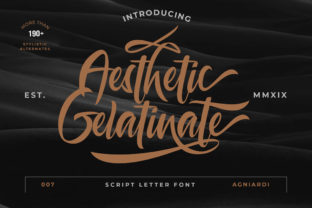
Aesthetic Gelatinate is a contemporary handwritten font that blends organic flow with confident, chunky strokes. Its name hints at two key qualities: aesthetic, meaning visually intentional and emotionally resonant; and gelatinate, suggesting a soft, slightly wobbly, jelly-like elasticity—evoking movement, playfulness, and approachability. Unlike rigid script fonts that mimic formal calligraphy, Aesthetic Gelatinate embraces imperfection: subtle variations in stroke weight, gentle irregularities in baseline alignment, and lively letterforms that feel authentically human—not AI-generated or overly polished.
Developed with modern design workflows in mind, it includes full Latin character support, multilingual glyphs (including accented characters for French, Spanish, Portuguese, and more), and OpenType features like stylistic alternates and ligatures—giving designers flexibility without complexity.
Why Designers Are Choosing It Today
In 2024, authenticity reigns supreme. Consumers respond to brands and content that feel genuine, warm, and human-centered. Aesthetic Gelatinate taps directly into that cultural shift. It’s not “cute” in a childish way—or “bold” in a sterile, corporate sense. Instead, it strikes a rare balance: contemporary yet tactile, energetic yet trustworthy, fun yet functional.
Consider these real-world applications:
- Social media graphics: Instagram carousels, TikTok thumbnails, and Pinterest pins gain instant visual appeal when headlines use Aesthetic Gelatinate—its rhythm guides the eye while its warmth invites engagement.
- Brand storytelling: Cafés, indie bookshops, wellness studios, and eco-conscious startups use it in logos and packaging to signal creativity, care, and community—not cold efficiency.
- Educational materials: Teachers and e-learning designers apply it in worksheets, slide headers, or digital storybooks to make learning feel inviting—especially for younger audiences or neurodiverse learners who benefit from friendly, non-intimidating typography.
- Personal creative projects: From wedding invitations to zine covers and podcast artwork, Aesthetic Gelatinate adds a handcrafted soul that resonates across platforms.
How It Differs From Similar Fonts
It’s easy to confuse Aesthetic Gelatinate with other playful scripts—but context matters. Let’s clarify common misconceptions:
- It’s not a “kids-only” font. While joyful, its strong x-height and generous spacing ensure clarity even at small sizes—making it viable for body text in short-form contexts (e.g., quote overlays, app UI microcopy).
- It’s not “just decorative.” Many handwritten fonts sacrifice function for flair. Aesthetic Gelatinate was engineered for versatility: it pairs beautifully with clean sans-serifs (like Inter or Poppins) in hybrid layouts—and holds up in both print and high-DPI screens.
- It’s not AI-synthesized. Though digitally crafted, every glyph reflects intentional human decision-making—not algorithmic interpolation. That nuance shows up in how letters connect, how curves breathe, and how rhythm feels intuitive rather than mechanical.
The Role of Typography in Emotional Communication
Research in cognitive psychology confirms that typefaces carry implicit meaning. Serif fonts often suggest tradition or authority; geometric sans-serifs imply innovation or neutrality; and handwritten styles activate associations with creativity, intimacy, and spontaneity. Aesthetic Gelatinate amplifies those associations—not through exaggeration, but through thoughtful restraint.
For example, compare two versions of the same headline: “Your Ideas Matter.” In Helvetica, it reads as factual. In a spidery, ultra-thin script, it might feel fragile or fleeting. But in Aesthetic Gelatinate? It feels affirming—grounded, supportive, and quietly empowering. That emotional resonance is why smart brands invest time in type selection—not just aesthetics, but psychological alignment.
Practical Tips for Using Aesthetic Gelatinate Well
Like any expressive tool, its impact depends on how you wield it. Here’s how to maximize its strengths—and avoid common pitfalls:
- Use it for emphasis, not exposition. Reserve Aesthetic Gelatinate for headlines, pull quotes, logos, or call-to-action buttons—not long paragraphs. Its personality shines brightest when contrasted with neutral supporting type.
- Respect hierarchy. Pair it with a highly legible sans-serif (e.g., Inter or Manrope) for body copy. This creates visual breathing room and directs attention where it matters most.
- Test across devices. While optimized for screen use, always preview on mobile—especially in email clients or social feeds where rendering can vary. Adjust tracking (letter spacing) slightly if needed for tighter lines.
- Leverage OpenType features. Enable stylistic alternates in design software (Figma, Adobe apps) to swap in livelier ‘a’, ‘g’, or ‘y’ variants—adding subtle uniqueness without manual editing.
Where It Fits in Broader Design Trends
Aesthetic Gelatinate doesn’t exist in isolation. It reflects three converging movements in contemporary design:
- The Human-Centered Web: As interfaces grow more complex, users crave warmth. Fonts like this help soften digital experiences—think of it as “typographic hospitality.”
- The Rise of Micro-Branding: Small businesses and solopreneurs need distinctive, scalable identities. A well-chosen handwritten font offers instant memorability without expensive custom lettering.
- Accessibility-Aware Creativity: Modern designers no longer choose between beauty and inclusion. Aesthetic Gelatinate’s clear letterforms, open counters, and consistent spacing meet WCAG contrast and readability guidelines—proving expressiveness and accessibility aren’t mutually exclusive.
Getting Started With Aesthetic Gelatinate
Whether you’re a student designing your first portfolio, a marketer refreshing a brand kit, or a developer adding personality to a landing page, integrating Aesthetic Gelatinate is straightforward:
- For web use: Host via self-hosted files or trusted font services. Always include fallbacks (
font-family: "Aesthetic Gelatinate", system-ui, sans-serif;) and definefont-display: swap;for optimal loading. - In design tools: Import the .OTF or .TTF file into Figma, Illustrator, or Canva (Pro). Use layer styles to add subtle shadows or outlines for extra dimension—just don’t overdo it.
- For print: Embed fonts in PDF exports and confirm glyph coverage matches your language needs—especially if using diacritics or extended punctuation.
And remember: great typography starts with purpose—not trends. Ask yourself: What feeling do I want this text to evoke? Who is reading it—and where? What message should linger after the words are forgotten? When your answer aligns with Aesthetic Gelatinate’s spirit—bold, kind, and vibrantly alive—you’ll know it’s the right choice.
Final Thought: Typography as Quiet Advocacy
In an era of rapid-scrolling feeds and shrinking attention spans, type is one of the few tools that operates beneath conscious awareness—yet shapes perception deeply. Choosing Aesthetic Gelatinate isn’t just about picking a pretty font. It’s a quiet act of advocacy: for humanity over automation, for joy over uniformity, for connection over detachment. It reminds us that even in digital spaces, our voices—and our designs—can be unmistakably, unapologetically human.