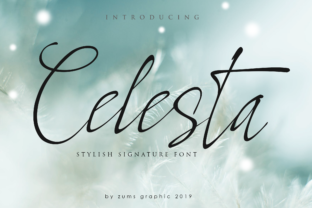
Celesta: A Hand-Drawn Script Font That Feels Human
If you’ve ever spent minutes—or hours—scrolling through font libraries searching for something that feels personal, expressive, and unmistakably *alive*, Celesta may be the quiet answer you’ve overlooked. It’s not a flashy display font with exaggerated flourishes or a rigid calligraphic system demanding technical precision. Instead, Celesta is a script font grounded in authenticity: each character carries subtle variation, gentle pressure shifts, and the soft imperfections of real pen-on-paper movement. That natural hand-made touch isn’t just aesthetic—it changes how your audience reads, connects with, and remembers your work.
Why “Hand-Made” Matters More Than You Think
In an era saturated with AI-generated visuals and ultra-polished templates, human texture stands out—not as a flaw, but as a signal of intention. Celesta’s organic rhythm helps designs avoid the “generic” trap. When used in a small business logo—say, a ceramic studio, a botanical apothecary, or an independent bookshop—the font quietly communicates care, craft, and individuality. Viewers don’t consciously register “this looks hand-drawn,” but they *do* feel warmth and approachability. That emotional resonance supports trust, especially for audiences making decisions based on values, not just features.
Where Celesta Fits—and Where It Doesn’t
Celesta shines in contexts where voice and personality matter more than speed or scalability. It works exceptionally well for:
- Logos and brand marks for lifestyle brands, creative studios, wedding vendors, and artisanal services—especially when paired with a clean sans-serif for balance;
- Short quotes in social posts, blog headers, or printed cards, where its fluidity invites pause and reflection;
- Editorial accents in magazines or newsletters—think pull quotes, section dividers, or title treatments that guide the eye without shouting;
- Posters and event announcements, particularly for cultural programming, indie film screenings, or community workshops where tone and inclusivity are central.
It’s less suited for long-form body text, legal disclaimers, data-heavy infographics, or interfaces requiring high legibility at small sizes. Celesta isn’t meant to replace Helvetica—it’s meant to complement it. Think of it as the handwritten note tucked inside a professionally printed brochure: intentional, memorable, and human-scaled.
Real-Time Design Decisions Made Easier
Freelancers and small teams often juggle multiple roles: designer, strategist, client communicator. Celesta simplifies early-stage decisions. Because its character set feels cohesive and self-contained—even without extensive typographic training—you can quickly test visual direction without overcomplicating mockups. A blogger launching a new newsletter series might use Celesta for the headline “Dear Reader,” then switch to a neutral body font. That single, thoughtful choice sets tone faster than writing three rounds of tagline options.
Educators designing classroom posters also benefit. A science teacher illustrating the water cycle can use Celesta for the title “The Journey of a Raindrop”—adding poetic weight without sacrificing clarity. Students remember information better when design supports meaning, not distracts from it. Celesta’s gentle curves and open letterforms keep focus on the message, not the mechanics of reading.
Supporting Creativity Without Overwhelming It
Some script fonts demand tight kerning control, alternate glyphs, or stylistic sets that require time to learn. Celesta avoids that friction. Its standard OpenType version includes smart spacing and consistent baseline alignment, so it performs reliably across platforms—from Canva to Adobe Illustrator to Google Docs (when installed locally). You won’t need to manually nudge every “f” or “y.” That reliability means more time spent refining content, mood, or layout—and less time troubleshooting spacing inconsistencies.
For hobbyists experimenting with print-on-demand products—like greeting cards or tote bags—Celesta offers immediate polish. A simple phrase like “Made with Love” gains sincerity because the letters lean into each other naturally, mimicking real handwriting. No extra effects, shadows, or textures needed. The font itself carries the expression.
A Word on Pairing and Practicality
Celesta pairs most effectively with typefaces that provide contrast without competition. Try it alongside geometric sans-serifs (like Poppins or Inter) for modern balance, or warm grotesques (such as Lato or Nunito) for friendly cohesion. Avoid pairing it with other scripts or highly decorative fonts—clarity suffers, and hierarchy blurs.
Also worth noting: Celesta is designed for English-language use. While it supports basic Latin characters and common punctuation, users working extensively with accented characters, extended diacritics, or non-Latin scripts should verify coverage before committing to large-scale multilingual projects. It’s not a universal solution—but it excels within its thoughtful scope.
Who Benefits Most—and Why
Entrepreneurs building their first brand identity often face tension between “professional” and “authentic.” Celesta bridges that gap. A freelance photographer using Celesta in her website banner (“Seeing Light Differently”) signals artistry without pretension. A wellness coach choosing Celesta for her workshop flyer (“Breathe. Begin. Belong.”) reinforces calm intentionality—before a single word is read.
Bloggers and content creators focused on storytelling—especially in niches like mindful living, slow fashion, or local food systems—find Celesta aligns with their values. It visually echoes the care behind their words. And for publishers producing limited-run zines or literary journals, Celesta adds tactile distinction on newsprint or recycled paper, reinforcing material and message as one.
Not a Magic Fix—But a Meaningful Tool
No font solves strategic ambiguity or replaces strong content. Celesta won’t fix unclear messaging, poor color choices, or inconsistent branding. But when those foundations are sound, Celesta elevates them—not by drawing attention to itself, but by deepening the impression your work leaves. It’s the difference between saying “We’re creative” and letting your typography quietly demonstrate it.
If you’re evaluating Celesta for a project, ask yourself: Does this need to feel personal? Is memorability more important than neutrality? Will readers encounter it in moments of reflection—not urgency? If yes, Celesta likely fits. If your goal is maximum scannability in a mobile ad or regulatory compliance text, look elsewhere. Matching tool to task remains the most timeless design principle—and Celesta knows exactly what it’s built for.