MoonBeam: The Handwritten Font That Feels Human
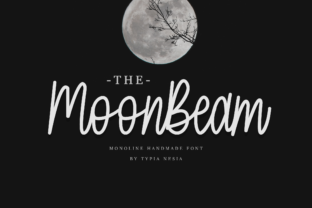
Imagine a font that doesn’t shout — it leans in, sketches softly, and leaves room for breath. MoonBeam is exactly that: a monoline handwritten typeface designed not for perfection, but for presence. Its subtle inconsistencies — the gentle taper of a downstroke, the slight wobble in a curve, the unhurried rhythm of connected letters — aren’t flaws. They’re intentional signatures of hand-drawn authenticity. Unlike rigid digital fonts built on grids and symmetry, MoonBeam moves with quiet confidence, offering warmth without sacrificing legibility or versatility.
What Makes MoonBeam Stand Out?
At its core, MoonBeam is a monoline font — meaning every stroke carries the same consistent weight. There’s no thick-thin contrast like in calligraphy or serif fonts. Instead, its charm lies in how that uniform line flows: relaxed, slightly imperfect, and effortlessly natural. Think of it as the visual equivalent of a thoughtful note jotted on quality paper — personal, approachable, and unpretentious.
Here’s what defines its character:
- Handwritten rhythm: Letters connect with organic spacing and variable baseline alignment — mimicking real pen movement, not algorithmic precision.
- Low contrast & high readability: The even line weight ensures clarity across sizes, from small captions to large hero text — especially on screens.
- Subtle imperfection: Slight variations in letter height, angle, and curvature avoid robotic repetition — inviting the eye to linger, not scan.
- Neutral yet expressive: It avoids exaggerated flourishes or quirky distortions, making it adaptable rather than distracting.
Where Does MoonBeam Shine? Real Uses, Real Impact
MoonBeam isn’t just for “cute” projects. Its balanced personality makes it surprisingly effective across diverse contexts — especially where trust, warmth, or creative authenticity matter.
Creative & Personal Branding
Photographers, illustrators, and independent designers often choose MoonBeam for logos, business cards, or portfolio headers. Why? Because it signals craftsmanship and individuality without overwhelming the work itself. A wedding photographer using MoonBeam in their logo subtly communicates intimacy and care — qualities clients actively seek.
Digital Experiences with Heart
On websites and apps, MoonBeam excels in moments that benefit from human tone: welcome messages, email sign-up prompts, testimonial quotes, or “about us” sections. Used sparingly (e.g., as a headline paired with a clean sans-serif body font), it adds emotional texture without compromising speed or accessibility.
Print That Feels Thoughtful
From artisanal product packaging to boutique café menus, MoonBeam brings tactile warmth to physical materials. Its monoline nature scales beautifully in print — crisp at 8 pt for fine print, expressive at 48 pt for posters. And because it’s designed with open counters and generous spacing, it remains highly legible even on textured paper or in soft ink impressions.
Who Benefits Most From MoonBeam?
You don’t need to be a designer to benefit from MoonBeam. Its value extends to anyone communicating with intention:
- Small business owners building brand identity on a budget — MoonBeam delivers distinctiveness without custom illustration.
- Educators and coaches creating handouts, worksheets, or course slides — its friendly tone lowers barriers to engagement.
- Content creators designing Instagram carousels, Pinterest pins, or YouTube thumbnails — where first impressions hinge on visual relatability.
- Nonprofits and community groups seeking approachable, inclusive typography for outreach materials — MoonBeam feels welcoming, never corporate.
Strengths — And Honest Considerations
Like any tool, MoonBeam shines brightest when matched to the right job. Understanding both its advantages and natural boundaries helps you use it with confidence.
Its strengths include:
- Instant warmth: Adds humanity in seconds — ideal for breaking digital coldness.
- Strong recall: Distinctive enough to stand out in crowded feeds or marketplaces.
- Design flexibility: Works equally well in minimalist layouts or layered, illustrated compositions.
- Accessibility-friendly base: Clear letterforms and open shapes support readability for many users — especially when used at appropriate sizes and contrast ratios.
Consider these practical notes:
- Not for dense body text: While highly legible in headings and short phrases, MoonBeam isn’t intended for long paragraphs. Its handwritten flow can fatigue the eye over extended reading.
- Pairing matters: It thrives alongside neutral, structured fonts — think Inter, Manrope, or IBM Plex Sans. Avoid pairing with other decorative or script fonts, which can compete for attention.
- Licensing awareness: Always verify usage rights — especially for commercial web embedding or app integration. Some versions allow unlimited personal use; others require a license for business deployment.
How to Know If MoonBeam Is Right for Your Project
Ask yourself three simple questions before reaching for MoonBeam:
- What emotion do I want people to feel first? If “friendly,” “thoughtful,” “authentic,” or “calm” top your list — yes, MoonBeam fits.
- Is this text meant to be scanned or savored? Use it for titles, quotes, calls-to-action, or branding elements — not legal disclaimers or multi-paragraph instructions.
- Does my overall design have room to breathe? MoonBeam performs best with generous whitespace, ample line height, and restrained color palettes. Cluttered layouts mute its quiet impact.
If you’re still unsure, try this quick test: write your key message in MoonBeam beside the same text in a standard sans-serif. Which version feels more aligned with your voice? More memorable? More *you*? Trust that instinct — typography is ultimately about resonance, not rules.
A Final Thought: Fonts Are Quiet Ambassadors
We rarely notice type until it misfires — until it feels sterile, confusing, or oddly distant. But when it lands right, like MoonBeam often does, it becomes an invisible ally. It doesn’t draw attention to itself; it draws people closer to your message. In a world saturated with polished automation, there’s real power in choosing something that looks — and feels — gently, unmistakably human.
So whether you're naming a new product, redesigning your website header, or crafting a heartfelt newsletter, consider MoonBeam. Not as decoration — but as intention made visible.