Crockotten: A Playful Script Font That Delivers—If Used Thoughtfully
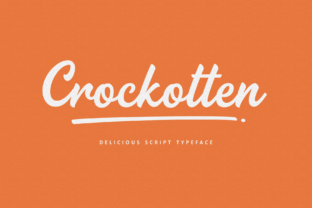
Crockotten is a script font that stands out for its lively rhythm, subtle bounce, and surprising versatility. Unlike many decorative scripts that feel rigid or overly ornate, Crockotten balances personality with legibility—making it a smart choice for logos, social media graphics, packaging, invitations, and even short-form web headers. Its hand-drawn charm feels authentic, not generic, and its open letterforms hold up well at medium sizes (24–60px) on screen and in print. But here’s what many overlook: its flexibility doesn’t mean it works everywhere. Used without intention, even a great script like Crockotten can weaken readability, dilute brand clarity, or clash with supporting type.
Assuming It Works Like a Display Font—Without Testing Context
One of the most common missteps? Treating Crockotten as purely “decorative” and placing it where strong hierarchy or fast scanning matters—like body text, data tables, or mobile navigation labels. Because it’s a script, some assume it’s only for big, bold moments. But Crockotten actually performs well in moderate-weight applications—if contrast, spacing, and background are carefully considered. The problem arises when designers drop it into a dark-on-light banner without adjusting tracking or testing on real devices. At smaller sizes or low contrast, letters like “a”, “e”, and “s” begin to blur together.
Instead: Test Crockotten at your intended size and weight *in context*. Try it over your actual background color—not just white. Use browser zoom (100%, 150%, 200%) and check how “Crockotten” reads next to a clean sans-serif like Inter or Open Sans. If you’re using it for a logo, export it at 3x resolution and view it on a phone screen. If the terminals or joins look muddy, scale up slightly—or pair it with tighter line-height and generous letter-spacing (80–100 units in design tools).
Overlooking Licensing—and Assuming “Free Download” Means “Free to Use”
Crockotten is available through reputable foundries and marketplaces—but not all versions are equal. Some free downloads floating online are outdated, lack full character sets (no accents, no numerals, no punctuation), or worse, carry unclear licensing terms. Using an unlicensed or modified version risks legal exposure, especially for client work or commercial products. You might save $29 upfront, but a cease-and-desist email or redesign delay costs far more in time and trust.
Before downloading: Check the source. Reputable providers like MyFonts, Fontspring, or the designer’s official site list usage rights clearly—web, desktop, app, or ePub. Look for OpenType features (ligatures, stylistic alternates) and language support (especially if you need extended Latin or Central European characters). If the download comes from a forum, GitHub repo, or unnamed blog, pause. Legitimate fonts rarely spread that way.
Mismatching It With Supporting Type—And Ignoring Rhythm
Crockotten shines when paired intentionally—not randomly. Its uneven baseline and calligraphic flow need visual breathing room and structural contrast. Pairing it with another script (even a “softer” one) often creates visual competition. And dropping it beside a tight, geometric sans like Montserrat *without adjustment* can make the layout feel jarring—not dynamic.
Better approach: Choose a supporting font with clear vertical stress and open apertures—think Manrope, Work Sans, or Lato. Then align their rhythms: if Crockotten has a relaxed, mid-contrast stroke, avoid ultra-high-contrast companions. Adjust sizing so x-heights relate meaningfully (e.g., Crockotten at 32px alongside Work Sans at 20px often feels harmonious). Also, use Crockotten for *one voice*—a headline, a tagline, a quote—and let the secondary font handle everything else: captions, buttons, paragraphs.
Skipping Kerning and Spacing Adjustments—Especially in Logos
Crockotten includes built-in kerning pairs, but automatic spacing rarely fits every word. “Coffee”, “Bakery”, or “Studio” may look fine—but “The”, “Love”, or “You” often need manual tweaking. Letters like “T” + “h”, “V” + “e”, or “o” + “u” can appear too loose or crowded depending on weight and size. In logos, inconsistent spacing undermines polish—even if the font itself is expressive.
Fix it early: In vector editors (Illustrator, Figma), convert Crockotten to outlines *only after finalizing spacing*. Then adjust individual letter positions—not just tracking. Zoom in to 400% and ask: Does each word feel cohesive? Does the eye move smoothly across the shape? If “Crockotten” looks bunched on the right or stretched on the left, nudge letters—not stretch the whole word. Small shifts (1–3px) often make the biggest difference.
Expecting It to Solve Brand Personality—Without Strategy
Yes, Crockotten conveys warmth, creativity, and approachability—but it won’t compensate for unclear messaging, inconsistent visuals, or mismatched audience expectations. A financial advisor using Crockotten for a retirement planning brochure may unintentionally signal “casual” instead of “trusted.” A luxury skincare brand might find its playfulness undercuts perceived efficacy.
Ask first: What feeling do you want people to *feel*, not just see? Then test Crockotten alongside your brand voice, imagery, and tone. Does it support your message—or distract from it? If you’re targeting educators designing classroom posters, Crockotten’s friendliness helps. If you’re launching a cybersecurity SaaS platform, it likely doesn’t belong in the hero section—though it could add charm to a friendly onboarding email header.
Final Checks Before You Commit
- Preview the full character set: Ensure it includes numbers, currency symbols, and punctuation you’ll actually use—not just the pretty letters.
- Test real copy: Not just “Crockotten”—try your actual headline, slogan, or product name. Watch for awkward letter collisions or unintended emphasis.
- Verify web performance: If embedding via @font-face, check file size and load impact. WOFF2 is ideal; avoid loading multiple weights unless necessary.
- Check accessibility basics: At 16px, is it readable against your background? Does it pass WCAG AA contrast at minimum size? (Tools like WebAIM Contrast Checker help.)
- Consider fallbacks: Define a graceful system font stack (e.g.,
"Crockotten", "Segoe Script", "Apple Chancery", cursive) so text remains legible if Crockotten fails to load.
Crockotten isn’t a shortcut—it’s a tool with texture, timing, and temperament. When chosen with awareness and adjusted with care, it adds humanity to digital spaces and distinction to printed ones. But like any expressive typeface, its strength lies not in how it looks alone, but how thoughtfully it connects to purpose, audience, and execution.