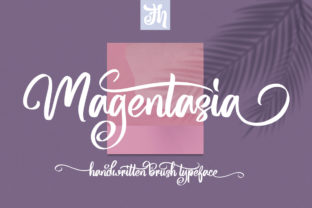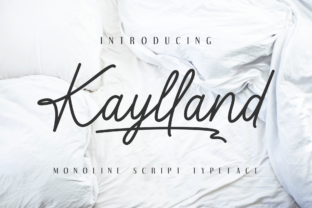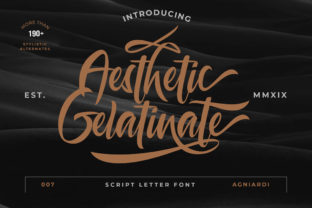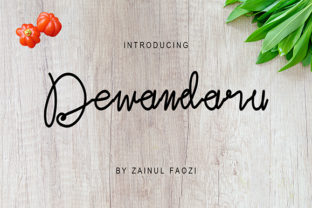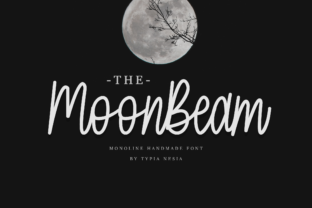
Cumils: A Handwritten Font That Balances Casual Charm with Real-World Utility
Cumils stands out not because it shouts, but because it breathes—quietly, confidently, and with unmistakable personality. It’s a handwritten font designed for clarity and warmth, not flourish for flourish’s sake. Unlike many script fonts that lean heavily into decorative excess or rigid calligraphic formality, Cumils occupies a practical middle ground: legible at small sizes, expressive at larger ones, and consistently human in its rhythm and spacing. Its value isn’t in novelty alone—it lies in how reliably it supports communication without distracting from it.
What Makes Cumils Distinctive—Beyond “Handwritten”
Many fonts claim to be “handwritten,” but few achieve the subtle balance Cumils maintains between authenticity and usability. Its letterforms are drawn with visible pen pressure—slight thicks and thins—but avoid dramatic contrast that can compromise readability. The lowercase a, g, and s follow natural handwriting logic, not calligraphic convention, giving text a relaxed, approachable cadence. Uppercase letters retain shape without becoming stiff; they echo the lowercase flow rather than imposing a separate stylistic regime.
Spacing is notably even—not tightly tracked like some display scripts, nor overly generous like casual brush fonts. This contributes directly to its performance in real layouts: headings remain cohesive, short body text blocks (like email subject lines or social captions) stay scannable, and paired use with neutral sans-serifs (e.g., Inter, Lato, or Open Sans) feels intentional, not forced.
Where Cumils Excels in Practice
Cumils performs best where tone matters as much as information—contexts where professionalism doesn’t require rigidity, and friendliness shouldn’t sacrifice polish. Consider these examples:
- Brand voice refinement: A wellness coach launching a new course might use Cumils for section headers in a sales page—its soft curves reinforce calm and accessibility without undermining credibility.
- Digital product microcopy: A note-taking app could apply Cumils sparingly to onboarding tips (“Try dragging this note to your favorites”)—adding warmth without sacrificing UI clarity.
- Educational materials: An educator designing printable reflection worksheets might set prompts in Cumils to signal invitation, not instruction—supporting student engagement without visual noise.
- Small business identity: A local ceramics studio using Cumils for its logo lockup and Instagram story highlights achieves cohesion across platforms while signaling craft and care, not corporate distance.
In each case, Cumils functions as a tonal anchor—not the sole visual element, but a consistent thread reinforcing intent. It doesn’t dominate; it clarifies mood.
Quality, Consistency, and Technical Reliability
Cumils ships with full Latin character support—including standard punctuation, numerals, and diacritics for Western European languages. Glyphs are well-hinted, rendering cleanly across devices and browsers. Kerning pairs are thoughtfully applied, especially in common two-letter combinations (to, he, an), reducing awkward gaps that plague less-polished handwritten fonts. There are no ligatures or discretionary alternates—a deliberate choice that reinforces its simplicity-first ethos.
This restraint pays off in workflow efficiency. Designers report faster iteration times when using Cumils in Figma or Adobe XD because there’s little need to manually adjust spacing or swap glyphs to fix collisions. For developers embedding it via Google Fonts or self-hosting, file size remains modest (~60 KB for WOFF2), and variable axis support isn’t included—which keeps things predictable, though limits typographic flexibility for advanced use cases.
Who Benefits Most—and When It Might Fall Short
Cumils suits professionals who prioritize audience resonance over stylistic spectacle. Freelance designers building brand systems for lifestyle, education, or service-based clients often find it a dependable go-to for secondary typography. Marketers crafting email campaigns or landing pages appreciate how it lifts tone without requiring illustration or custom lettering. Bloggers and content creators use it to differentiate quote callouts or chapter titles—adding visual pause without breaking reading flow.
It’s less suited for contexts demanding high-density information delivery: legal disclaimers, technical documentation, or data-heavy dashboards. Its inherent informality can dilute authority in formal sectors like finance or healthcare unless carefully contextualized (e.g., used only in patient-facing wellness guides, not compliance notices). Similarly, projects requiring multilingual expansion beyond Latin-based scripts will need complementary typefaces—Cumils doesn’t include Cyrillic, Greek, or extended Asian language support.
Practical Integration Tips
For optimal impact, treat Cumils as a supporting voice—not the lead instrument:
- Limit scope: Use it for headlines, pull quotes, logos, or short UI labels—not long paragraphs or body copy.
- Pair deliberately: Contrast works best. Pair with a clean, moderately weighted sans-serif (e.g., Manrope or Work Sans) rather than another script or overly geometric typeface.
- Test hierarchy: At 24px+, Cumils shines. Below 16px, legibility begins to soften—especially in low-contrast settings. Always preview in context, not isolation.
- Respect weight consistency: Cumils is a single-weight family. Avoid faux-bold or text-shadow tricks to simulate emphasis—they undermine its naturalism.
Long-Term Value and Creative Longevity
Cumils avoids trend dependency. It doesn’t mimic current design fads—no exaggerated bounce, no distressed textures, no forced irregularity. Instead, it leans into time-tested principles: rhythm, proportion, and restraint. That makes it resilient across shifting visual landscapes. A brand identity built around Cumils today won’t feel dated in three years simply because the font itself resists momentary aesthetics.
Its longevity also stems from versatility within boundaries. It adapts to print and screen, light and dark modes (with appropriate color contrast), and both minimalist and layered layouts—as long as its role remains clearly defined. Users who’ve licensed Cumils for multi-year projects report minimal need for replacement or rework, citing its stability across mediums and messaging shifts.
That said, its strength is also its limit: Cumils won’t solve broader branding challenges. It won’t compensate for weak messaging, inconsistent visuals, or misaligned audience strategy. It’s a tool—not a strategy. Its effectiveness multiplies when chosen intentionally, deployed sparingly, and supported by thoughtful design decisions around it.
If your work regularly bridges human connection and functional clarity—if you’re choosing fonts not just for appearance but for how they shape perception and invite attention—Cumils warrants genuine consideration. It’s not flashy, but it’s trustworthy. Not loud, but it’s memorable. And in an environment saturated with visual noise, that kind of quiet confidence is increasingly rare—and increasingly useful.