Bunny Honk: A Playful Retro Script Font
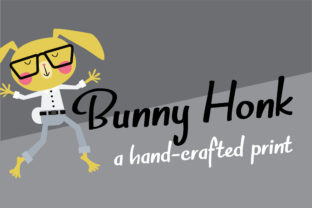
If you’ve ever scrolled through a design project and paused at a hand-drawn-looking headline that felt both nostalgic and refreshingly simple—you might’ve just seen Bunny Honk in action. It’s not just another script font. Bunny Honk stands out with its gentle curves, light bounce, and unmistakable retro charm—like something pulled from a 1950s greeting card or a sun-dappled café chalkboard.
What Makes Bunny Honk Special?
Bunny Honk is a friendly, low-contrast script font designed to feel approachable—not fussy. Its letters flow smoothly but never overwhelm, with subtle variations in stroke weight and soft, rounded terminals. There’s no sharp angularity or dramatic flair here. Instead, it offers quiet confidence: clean enough for modern use, warm enough to invite a smile.
It leans into retro aesthetics without leaning too hard—no heavy ink bleeds, no exaggerated swashes, no forced “vintage” textures. That balance makes it versatile. You can pair it with crisp sans-serifs for contrast or layer it with soft pastel palettes for cohesion. And because it’s carefully spaced and well-hinted, it reads clearly even at smaller sizes—unusual for many script fonts.
Who Benefits Most From Using Bunny Honk?
Beginners love Bunny Honk because it doesn’t demand design expertise to use well. You don’t need to master kerning pairs or adjust tracking by the pixel to get pleasing results. Type a short phrase—“Welcome,” “Handmade with Love,” or “Open Daily”—and it instantly feels intentional and inviting.
For small business owners, it adds personality without sacrificing professionalism. A bakery owner might use Bunny Honk for their weekly newsletter header; a yoga instructor could feature it on class schedule posters; an indie stationery brand may build their entire logo system around its gentle rhythm.
Bloggers and content creators find it especially helpful when they want to soften digital spaces—think Instagram story text overlays, Pinterest quote graphics, or email subject lines that stand out in crowded inboxes. Its warmth helps humanize brands that otherwise rely heavily on neutral or corporate fonts.
Real-World Uses That Work Well
- Print & Packaging: Sticker designs, product labels, greeting cards, and gift tags gain instant charm with Bunny Honk. Its simplicity ensures clean printing—even on textured paper or kraft stock.
- Digital Interfaces: While best suited for display use (not body text), it shines in UI elements like app onboarding screens, CTA buttons (“Get Started”), or website banners where tone matters more than density.
- Educational Materials: Teachers use Bunny Honk for classroom posters, reading corner signs, or student award certificates—its friendliness supports inclusive, joyful learning environments.
- Social Media & Marketing: Short-form video captions, Instagram highlight covers, and seasonal promo banners all benefit from its expressive yet uncluttered presence.
How to Use Bunny Honk Thoughtfully
Like any script font, Bunny Honk works best when used intentionally—not everywhere. It’s a voice, not background noise. Reserve it for moments where you want to signal warmth, creativity, or handmade care. Avoid long paragraphs or dense blocks of text—it wasn’t built for extended reading.
Also keep legibility top of mind. While it performs well at medium sizes (24–48px), extremely tight letter spacing or low-contrast color combos (like light gray on white) can blur its charm. Test it on your target devices—especially mobile screens—before finalizing layouts.
Pairing matters, too. Bunny Honk harmonizes beautifully with friendly sans-serifs like Nunito, Quicksand, or Montserrat Light. For contrast, try it beside a sturdy serif like Merriweather or Lora—but avoid overly ornate or rigid companions that clash with its relaxed energy.
Things to Consider Before Downloading or Licensing
Bunny Honk is typically offered as a desktop or web font, sometimes with extended language support. Check whether the version you’re considering includes OpenType features like stylistic alternates or ligatures—if those matter for your project. Some free versions may be limited to personal use only, so review licensing terms carefully if you plan to use it commercially (e.g., on client work, merchandise, or paid digital products).
Also consider file size if embedding Bunny Honk on websites. Web versions should be optimized and served via modern formats like WOFF2 to maintain performance. If speed is critical, load it selectively—for headings only—and fall back to system fonts for body copy.
Why Designers Keep Coming Back to Bunny Honk
It solves a quiet but common problem: how to add soul without sacrificing clarity. In a world full of sleek minimalism and AI-generated uniformity, Bunny Honk reminds us that design can still feel handmade, considered, and kind.
Its retro touch isn’t about nostalgia for nostalgia’s sake—it’s about tapping into visual cues that signal sincerity, care, and approachability. That’s why educators choose it for welcome signs, why wedding planners use it for save-the-date illustrations, and why solopreneurs build whole brand identities around its rhythm.
You don’t need special training to appreciate Bunny Honk. You just need a moment where you want words to feel like a gentle nudge instead of a command—a handwritten note instead of a press release.
A Final Thought for New Users
Start small. Try Bunny Honk on one thing this week: a social media post caption, a printable habit tracker title, or the name tag for your next team meeting. See how it changes the mood—not just of the text, but of the space around it. Fonts shape feeling more than we realize. And Bunny Honk does it with quiet, cheerful precision.