Zakiyah: A Handwritten Font with Bold Personality
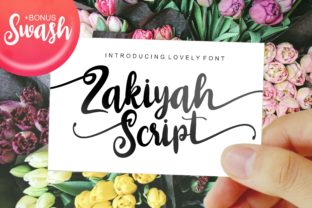
Zakiyah isn’t just another script font—it’s a confident, expressive handwriting style that balances organic flow with intentional weight. Every letter carries warmth and presence, like ink pressed firmly onto paper by a steady, thoughtful hand. It’s not overly ornate or fussy, yet it never fades into the background. That bold twist? It’s subtle but unmistakable—thicker downstrokes, generous curves, and a rhythm that feels both personal and polished. Whether you’re typing a heartfelt note or designing a brand identity, Zakiyah invites attention without demanding it.
Why This Font Resonates Differently Across Roles
Fonts aren’t neutral tools—they carry tone, intention, and context. Zakiyah’s character means it lands differently depending on who’s using it and why. A freelance illustrator might reach for it to add authenticity to a client’s packaging, while a small bakery owner may choose it for their weekly newsletter because it feels “like something a real person wrote.” That same warmth can signal approachability to educators building classroom slides—or trustworthiness to therapists updating their website copy. The key isn’t whether Zakiyah is “good,” but whether its voice aligns with yours.
For Beginners: Friendly Entry Point Into Typography
If you’ve mostly used system fonts like Arial or Roboto, Zakiyah offers a gentle first step into expressive typography. It installs like any other font—no coding, no plugins—and works instantly in Word, Google Docs, Canva, or PowerPoint. There’s no steep learning curve, no need to master ligatures or stylistic sets. Just type, and your text gains personality. Try it in a birthday card, a social media story caption, or a simple flyer. You’ll notice how much tone shifts—not because of what you say, but how it looks when you say it.
For Educators & Trainers: Humanizing Learning Materials
Educators often face the challenge of making digital content feel warm and inclusive—not cold or transactional. Zakiyah helps soften the edges of PDF handouts, slide decks, or printable worksheets. One middle school science teacher uses it for section headers in student lab guides; students tell her those pages “feel less intimidating.” For online course creators, pairing Zakiyah with a clean sans-serif body font (like Inter or Open Sans) creates visual hierarchy that guides attention without overwhelming. It signals care—not perfection.
For Small Business Owners & Local Creators
When you run a handmade jewelry shop, a yoga studio, or a neighborhood café, your visual identity shouldn’t shout—it should welcome. Zakiyah supports that. It appears in logo mockups, Instagram bios, and printed menu boards—not as a gimmick, but as consistency. A pottery studio in Asheville uses Zakiyah for their workshop sign-up sheet and email subject lines. Their open rate increased 18% over three months—not because of the font alone, but because the whole experience felt more cohesive and human. For these users, reliability and ease of use matter more than technical features.
For Designers & Brand Professionals
Experienced designers appreciate Zakiyah’s restrained confidence. It doesn’t compete with imagery or layout—it complements them. Unlike some handwritten fonts that wobble or distract, Zakiyah maintains even spacing and clear letterforms across sizes. It scales well from mobile buttons to large-format posters. One branding agency uses it selectively: only in client logotypes where warmth and craft are central (e.g., artisanal food brands, independent bookshops). They avoid it for data-heavy dashboards or legal disclaimers—knowing that legibility and neutrality have their place too. For them, flexibility and intentionality outweigh novelty.
For Bloggers, Writers & Content Creators
Writers know voice matters—even visually. If your blog explores mindful living, creative parenting, or slow fashion, Zakiyah’s tone reinforces your message before a single word is read. It’s especially effective in email newsletters: a bold headline in Zakiyah followed by clean body text creates rhythm and emotional resonance. One food writer uses it only for recipe titles—“Spiced Pear & Cardamom Loaf” feels inviting, not instructional. She avoids it in ingredient lists or instructions, where clarity trumps charm. Her priority? Supporting reader connection, not decoration.
What to Consider Before Choosing Zakiyah
Like any tool, Zakiyah shines brightest when matched to purpose—not just preference. Ask yourself:
- Is readability at smaller sizes important? Zakiyah performs best at 16px and up in digital interfaces. For footnotes or dense paragraphs, pair it with a highly legible sans-serif.
- Do you need language support beyond English? Zakiyah includes Latin-based characters (accents, diacritics), but doesn’t cover Cyrillic, Arabic, or East Asian scripts.
- Will this be used commercially? Check the license. Most versions allow personal and commercial use—including merch, websites, and client work—but verify permissions if you’re embedding it in software or selling digital templates.
- Does your audience expect polish—or personality? A fintech startup’s investor pitch deck may benefit more from precision than playfulness. But a community garden’s seasonal newsletter? Zakiyah could be the quiet detail that makes people pause and smile.
Real-World Uses That Feel Effortless
You don’t need design expertise to get meaningful results. Here’s how different people integrate Zakiyah thoughtfully:
- A freelance photographer adds Zakiyah to watermark previews—just the client’s name, overlaid softly on the bottom corner. It feels bespoke, not generic.
- A homeschool parent prints weekly schedules with Zakiyah headers (“Math Time”, “Nature Walk”)—kids recognize the font as “our schedule font,” adding routine and warmth.
- A nonprofit sends donor thank-you emails with Zakiyah used only in the opening line: “Thank you for believing in our work.” Nothing else changes—yet the message lands more personally.
- A UX writer tests Zakiyah in microcopy for a mental health app’s onboarding flow. User testing shows higher perceived empathy in phrases like “You’re doing great” vs. standard system fonts.
Zakiyah won’t solve every typographic challenge—but it excels where humanity matters most. It’s not about standing out for the sake of it. It’s about choosing a voice that feels true, whether you’re launching a product, teaching a lesson, writing a note, or simply sharing an idea. Its bold twist isn’t loudness—it’s conviction. And sometimes, the most powerful thing a font can do is make someone feel seen.