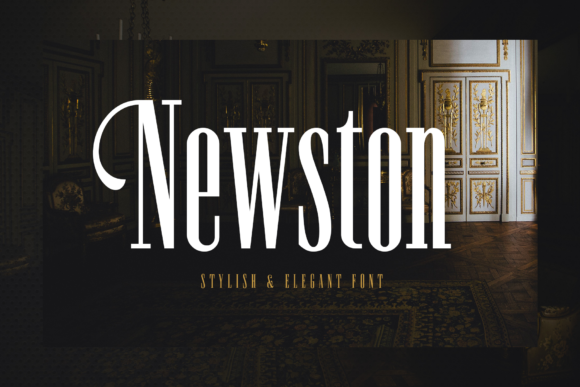
Newston: A Serif Font That Means Business—Without Losing Its Soul
Imagine opening a pitch deck for a boutique architecture firm—and instantly sensing quiet confidence in the typography. Or scrolling through a literary magazine’s digital issue and pausing, just once, because the body text feels *weighted*, intentional, like it’s holding space for the words rather than rushing them along. That’s Newston at work: a classic serif font grounded in tradition but sharpened with a bold, structural twist. It doesn’t shout. It settles in—and makes everything around it feel more considered.
What Newston Actually Is (No Jargon, Just Clarity)
Newston isn’t a revival of Garamond or a reinterpretation of Baskerville. It’s its own thing: a contemporary serif built on strong vertical stress, generous x-height, and carefully tuned contrast between thick and thin strokes. The “bold twist” isn’t just marketing—it shows up in the confident slab-like terminals on letters like C, S, and a, and in the subtle but unmistakable heft of its medium and bold weights. It reads beautifully at 14pt in a newsletter—and commands attention at 72pt on a book cover.
Where Newston Fits in Real Creative Work
People don’t pick fonts to check a box. They reach for them when something feels off—when a brand voice sounds flat in Helvetica, or a thesis feels visually lightweight in Times New Roman. Newston steps in where clarity meets character.
For Freelancers Building Credibility Fast
A freelance financial advisor designing their first client onboarding kit might use Newston in headings and pull quotes—not because it’s trendy, but because its structured rhythm mirrors how they explain complex ideas: step by step, grounded, unhurried. Paired with a clean sans-serif for body copy (like Inter or Open Sans), Newston adds authority without stiffness. Same goes for a yoga instructor launching a workshop series: Newston in the title treatment signals intentionality, not austerity—especially when set in warm gray ink on uncoated paper.
In Publishing—From Zines to Academic Journals
Small-press editors love Newston for interior typography that supports long-form reading without fatigue. Its open counters and consistent spacing keep lines flowing smoothly—even on lower-resolution screens. One independent publisher told us they switched from Adobe Caslon to Newston for their quarterly essay journal because “readers said the text felt ‘easier to stay inside.’” That’s not poetic fluff; it’s the result of thoughtful letterfit and generous inter-character spacing.
For Educators Designing Learning Materials
Teachers building slide decks or printable handouts often default to system fonts for accessibility—but sacrifice visual hierarchy. Newston’s distinct weight progression (Light → Regular → SemiBold → Bold) lets educators emphasize concepts *typographically*, not just with color or size. A biology teacher using Newston SemiBold for key terms and Regular for explanations creates instant, scannable structure—no animation or icons needed. And because it renders crisply at small sizes, it works reliably across school-issued Chromebooks and printed PDFs alike.
When Newston Isn’t the Right Call (And What to Try Instead)
Newston excels where tone matters as much as legibility—but it’s not universal. If your project demands high-speed scanning (think airport signage or emergency instructions), its deliberate pacing slows readers down unnecessarily. For playful children’s apps or energetic social media campaigns, its seriousness can feel out of sync. And if you’re working under tight brand guidelines that mandate a specific type family (like IBM Plex or Google’s Roboto), forcing Newston in may dilute consistency more than it elevates design.
Also worth noting: Newston is a paid font. It’s not available on Google Fonts or free font aggregators. You’ll license it directly from its foundry—or through platforms like Adobe Fonts (included with Creative Cloud). That means budget and licensing scope matter. A solopreneur buying a desktop license for personal use has different needs than a marketing agency deploying it across client websites, email templates, and print collateral. Always check the EULA before embedding in web projects or distributing branded assets.
How to Use Newston Without Overthinking It
You don’t need a degree in typography to get Newston right. Start simple:
- Pair it deliberately: Use Newston for headlines, titles, pull quotes, and short blocks of emphasized text. Keep body copy in a neutral, highly readable sans-serif—especially in digital interfaces.
- Leverage its weights: Don’t just swap Regular for Bold. Try Light + Bold for elegant contrast in editorial layouts, or SemiBold alone for clean, modern labels on dashboards or product packaging.
- Respect its rhythm: Newston breathes best with slightly more line height (1.5–1.6) and generous letter spacing in all-caps settings. Tight tracking kills its quiet confidence.
- Test where users actually see it: View your Newston-heavy PDF on a tablet in daylight. Preview your web banner on an older Android phone. Does the bold weight hold up? Does the light weight vanish? Adjust before finalizing.
Why This Font Sticks With People Long After Launch
Newston doesn’t chase novelty—it solves quiet problems creators face daily: How do I make this report feel trustworthy? How do I honor the weight of this story without making it feel heavy? How do I signal professionalism without sounding corporate?
A small bookstore used Newston for their seasonal reading list poster—and noticed customers lingering longer near the display. A nonprofit redesigned their annual impact report with Newston headings and saw a 22% increase in time-on-page for the narrative sections. A university department switched their faculty award certificates from Arial to Newston—and received multiple unsolicited compliments from recipients about how “meaningful” the typography felt.
That’s not magic. It’s intention made visible. Newston gives weight to words without weighing them down. It brings seriousness to serious work—but leaves room for warmth, wit, and humanity. And in a world full of fleeting trends and algorithm-driven aesthetics, that kind of quiet reliability is rare. Not flashy. Not loud. Just right—for the right moment.