Monogram M Monofont Caps M: The Strategic Shift Toward Intentional, Handcrafted Identity in Digital Branding
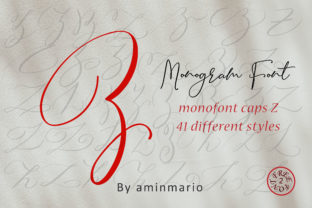
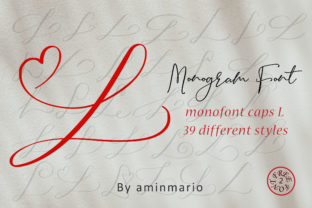
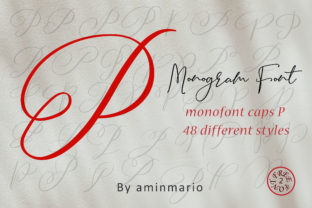
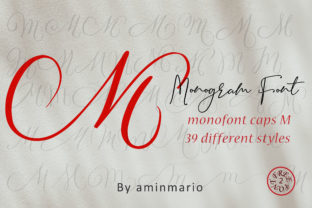
In an era defined by algorithmic feeds, AI-generated visuals, and templated design systems, a quiet but powerful counter-trend is gaining momentum: the return of human signature—not as decoration, but as strategic identity infrastructure. At the center of this movement stands Monogram M Monofont Caps M: a meticulously crafted collection of 36 distinct, natural-handwriting interpretations of the capital letter M, designed exclusively for monogram use—not typography, not text composition, but singular, expressive emblematic presence.
What Monogram M Monofont Caps M Really Is (and Isn’t)
Monogram M Monofont Caps M is not a typeface built for body copy or headlines. It does not aim to replace Helvetica, Inter, or even elegant serif families. Instead, it’s a focused typographic tool: a curated library of hand-drawn capital M glyphs, each capturing the organic rhythm, pressure variation, and subtle asymmetry of authentic pen-on-paper execution. Every variant reflects a unique gesture—some fluid and looping, others sharp and architectural; some grounded and weighty, others airy and gestural—but all rooted in real handwriting discipline.
This precision matters. Unlike generic “script” fonts that simulate cursive with uniform spacing and artificial flourishes, Monogram M Monofont Caps M embraces imperfection as intention. There are no ligatures, no alternate characters for letters beyond M, and no automatic contextual substitutions. Its power lies in its limitation: it exists solely to anchor personal or brand identity at its most distilled point—the monogram.
Why Monograms Are Resurging—Beyond Nostalgia
Monograms have long signaled legacy—think royal crests, family silver, or bespoke tailoring. But today’s resurgence isn’t about heritage mimicry. It’s a response to three converging shifts:
- Digital saturation: With over 500 million active websites and billions of social profiles, visual differentiation is harder than ever. A custom monogram cuts through noise faster than a full-word logo—especially in constrained spaces like app icons, email signatures, or profile avatars.
- Authenticity demand: Consumers and collaborators increasingly favor signals of human authorship. A hand-drawn M conveys care, craft, and individuality in ways algorithmically optimized assets cannot replicate—even when deployed digitally.
- Ownership economy: Creators, freelancers, and micro-brands are building direct relationships without corporate intermediaries. Their monogram becomes their seal—a consistent, ownable mark across platforms, contracts, merch, and digital touchpoints.
Consider a freelance UX researcher launching a Substack newsletter: instead of a generic avatar or stock icon, she selects the “M-07” variant from Monogram M Monofont Caps M—a confident, slightly tapered stroke with a soft terminal. That single glyph appears on her website header, Notion workspace favicon, PDF report footers, and even embroidered on her studio notebook. It doesn’t say “UX Researcher.” It says her.
Beyond the M: A Cohesive Identity Ecosystem
What makes Monogram M Monofont Caps M uniquely practical—not just aesthetic—is its intentional integration with two complementary typefaces included in the package: PLANETS SIGNATURE and WEST LONDON. These aren’t arbitrary pairings. They form a functional typographic triad:
- MONOGRAM (.ttf/.otf): For the monogram itself—pure emblematic function.
- PLANETS SIGNATURE (.ttf/.otf): A warm, expressive signature-style font with full uppercase and lowercase support. Designed to echo the gesture language of the M variants, it enables handwritten-style names, taglines, or short credits—without competing visually.
- WEST LONDON (.ttf/.otf): A clean, contemporary sans-serif with strong legibility and neutral tone. It provides typographic grounding—ideal for body text, captions, UI labels, or supporting content where clarity trumps flourish.
This trio eliminates the common friction of font pairing: no guessing whether a script font clashes with your system font, no licensing mismatches, no inconsistent x-heights or stroke weights. It’s a ready-to-deploy identity stack—designed from the ground up to coexist.
Real-World Workflow Integration
For professionals managing multiple client identities or evolving personal brands, this cohesion translates directly into efficiency. A branding consultant can maintain a master Notion template where each client has:
- A dedicated MONOGRAM variant selected as their primary monogram (e.g., M-22 for a wellness coach seeking calm authority),
- PLANETS SIGNATURE applied consistently to client name lockups and quote cards,
- WEST LONDON used across all deliverables—from strategy decks to style guide documentation.
No font hunting. No stylistic negotiation. Just intentional, harmonized application—scalable across tools (Figma, Adobe Creative Cloud, Canva, even Google Docs via font upload).
Aligning With Broader Creative and Technological Shifts
The rise of Monogram M Monofont Caps M mirrors deeper currents in creative technology:
From generative to guided creation. While AI tools accelerate ideation, they often dilute distinctiveness. Designers and founders are turning back to *curated, human-made assets*—not to reject technology, but to assert control over voice and vision. This monogram set is a “guided” asset: narrow in scope, high in intention.
From scalable to signature-first systems. Modern brand systems no longer begin with logos or color palettes. Increasingly, they start with a core signature element—the monogram—that then informs everything else. It’s faster to prototype, easier to trademark, and more adaptable across emerging formats (AR avatars, NFC-enabled business cards, generative PFP variations).
From universal to contextual typography. As variable fonts and web font loading improve, designers prioritize *semantic font roles*: one for identity (monogram), one for expression (signature), one for utility (sans). Monogram M Monofont Caps M fulfills the first role with surgical precision—freeing other fonts to serve their purpose without compromise.
Who Benefits—and How
This isn’t niche typography for calligraphers alone. Its utility spans disciplines:
- Entrepreneurs launching DTC brands use the M monogram as their first product stamp—on packaging, unboxing videos, and Instagram Stories—building recognition before investing in full logo suites.
- Freelancers in design, writing, or consulting embed their chosen M variant into proposal templates and invoice headers—creating instant visual continuity and perceived professionalism.
- Marketers running multi-channel campaigns deploy the same monogram across LinkedIn banners, email footers, and printed swag, reinforcing top-of-mind association with minimal asset management.
- Content creators building Patreon communities or YouTube channels use PLANETS SIGNATURE for personalized thank-you graphics—leveraging the shared gesture DNA with their monogram for cohesive emotional resonance.
Even developers benefit: the clean OpenType structure of all three fonts ensures reliable web embedding via @font-face, with lightweight file sizes (<50 KB average per font) and full cross-browser support—including variable font-ready features where applicable.
Not a Trend—A Tool for Enduring Clarity
Monogram M Monofont Caps M succeeds because it answers a persistent need—not for novelty, but for clarity of signal. In a world where attention is fragmented and trust is earned through consistency, a well-chosen monogram acts as both anchor and amplifier. It doesn’t shout. It resonates.
Its 36 styles aren’t “options for the sake of choice.” They’re 36 calibrated expressions of tone—each suited to a specific voice, audience, or ambition. Paired with PLANETS SIGNATURE and WEST LONDON, it forms a rare trifecta: human-centered, technically robust, and immediately actionable.
That’s why professionals aren’t just downloading Monogram M Monofont Caps M. They’re building identities with it—quietly, deliberately, and with unmistakable presence.